Emergency Repairs
24/7 Emergency Plumber in Pueblo
Burst pipe, water coming up through a drain, or a tank that let go at two in the morning? Plumbing emergencies don’t wait for business hours, and neither do we. Call and we’ll talk you through stopping the damage, then get someone out.
If water is running right now
- Shut off the water. Close the valve at the fixture if the leak is at one fixture, or the main shut-off if you can’t isolate it.
- Kill the power to the area if water is anywhere near outlets, cords or appliances. If reaching the panel means standing in water, stop and call an electrician or 911.
- Move what you can out of the way, and put towels or a bucket under the leak to limit the spread.
- Call us at (719) 406-3328. Tell us what you’re seeing and we’ll tell you what to do next while we’re on the way.
If you smell gas, don’t call a plumber first
Leave the building, don’t switch anything electrical on or off, and call your gas utility’s emergency line or 911 from outside. Make that call before ours. We’ll handle the plumbing side once the gas side is safe.
What we treat as an emergency
If water is damaging your home, or you have none at all, it’s an emergency. The calls we get most:
- Burst or split pipe — often a frozen line in a crawlspace, garage or exterior wall that let go as it thawed.
- A major leak you can’t stop — a supply line, a failed valve, or a connection behind a wall or under a floor.
- Sewage backing up into a tub, shower or floor drain. This is a health matter as much as a plumbing one, and it doesn’t improve on its own.
- No water at all anywhere in the house.
- A water heater leaking from the tank rather than from a fitting. Shut off its water supply and, on a gas unit, turn the control to off.
- An overflowing toilet that won’t stop at the shut-off valve behind it.
A dripping faucet, one slow drain or a toilet that runs can safely wait for a scheduled visit. If that’s what you describe when you call, we’ll say so and book you in normally rather than treat it as an emergency.
Frozen and burst pipes
Pueblo winters put pipes in garages, crawlspaces and exterior walls at real risk, and the damage usually shows up as the ice thaws rather than while it’s frozen. If a faucet drops to a trickle in freezing weather, open it, warm the line gently with a hair dryer or hot towels working back from the faucet, and never go near it with an open flame.
Prevention is mostly small habits: disconnect and drain garden hoses before the first freeze, insulate exposed pipe runs, leave cabinet doors open on cold nights so warm air reaches pipes on exterior walls, and let a faucet drip when temperatures drop hard. If you’re leaving town in winter, don’t turn the heat off entirely.
What happens when you call
You’ll talk to us, not an answering service reading a script. We’ll ask what you’re seeing, help you stop the water if it’s still running, and tell you honestly when we can be there. Response times vary with call volume and where you are, and we’d rather give you a real window than a reassuring one we can’t keep.
When we arrive we’ll find the source, explain what failed and what it takes to fix it, and give you the price before we go further. Emergency work carries the same workmanship guarantee as anything else we do, and we’re fully licensed and insured in Colorado — Colorado Plumbing License #4880.
Some emergencies need a permanent repair that can’t sensibly happen at 3am. In that case we’ll make it safe and stable, then come back and finish properly in daylight. We’ll be clear about which is which.
What emergency work costs
Outside our regular hours, 8am to 4pm Monday to Friday, emergency work costs double the regular rate when you need help right away: $240 per hour for general plumbing and $360 per hour for drain cleaning. We quote most jobs before starting. On the rest, we explain what we find before going further, so you know the number rather than finding out afterwards. See the full rate table.
And if what you describe can safely wait until normal hours, we’ll say so and book you in at the standard rate. Charging an emergency premium for a job that did not need one is a good way to never hear from someone again.
What customers say
Eric was our angel when he fixed our sewer problem when we moved into our new home!
We appreciate your fast service and excellent work. Happy Holidays!
People Ask
Emergency plumbing questions
What should I do if I have a major water leak?
If you have a major leak, quick action can help minimize damage:
- Turn off the main water supply to your home immediately.
- Shut off electricity in affected areas if water is near outlets or appliances.
- Move valuables and furniture away from the leak if possible.
- Call Burner Brothers Plumbing right away for emergency service.
Our team can quickly locate the source of the leak and make the necessary repairs to protect your home.
How quickly can you respond to a plumbing emergency?
Response times can vary depending on call volume and location, but Burner Brothers Plumbing prioritizes emergency calls and works to respond as quickly as possible. If you’re dealing with a burst pipe, major leak, or another urgent plumbing problem, contact us right away and we’ll dispatch a technician as soon as possible.
What counts as a plumbing emergency?
If water is damaging your home, or you have no usable water at all, treat it as an emergency and call. That includes:
- A burst or leaking pipe you cannot stop
- Water coming up through a drain, or sewage backing up into the house
- No water anywhere in the home
- A water heater leaking from the tank itself
- An overflowing toilet you cannot shut off at its valve
A dripping faucet, one slow drain or a running toilet can safely wait for a scheduled visit, and we’ll tell you honestly if that’s what you’re describing.
How do I shut off the water to my house?
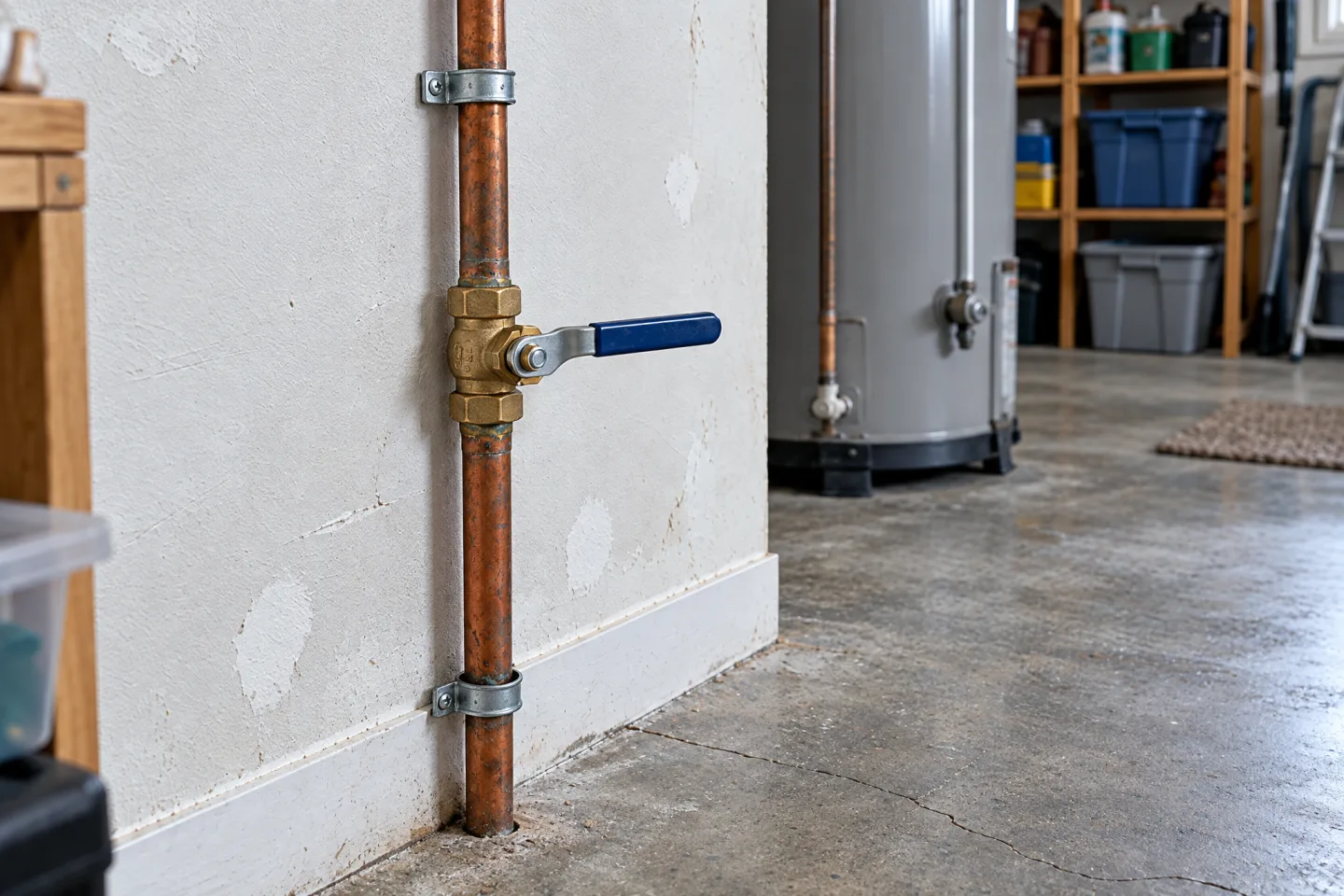
Find this before you need it. Most homes have a main shut-off valve where the supply line enters the house, often in a basement, crawlspace, utility room or garage, frequently near the water heater. Turn a round handle clockwise, or give a lever a quarter turn so it sits across the pipe. If you can’t find it or it won’t budge, there is also a curb stop near the street, which usually needs a key and is the water department’s to operate.
Individual fixtures have their own small valves under the sink or behind the toilet, which is often all you need to close for a single leaking fixture.
What should I do about a frozen pipe?
Colorado cold snaps freeze pipes in crawlspaces, garages and exterior walls. If a faucet drops to a trickle in freezing weather, you likely have ice in the line:
- Open the affected faucet, so melting water has somewhere to go and pressure can release
- Warm the pipe gently with a hair dryer or towels soaked in hot water, working from the faucet back toward the frozen section
- Never use a blowtorch or any open flame — it is a fire risk and can burst the pipe outright
- Know where your main shut-off is before you start thawing, in case the pipe has already split
If the pipe has burst, shut the water off at the main and call us.