Drain Cleaning
Drain Cleaning in Pueblo & Pueblo West
Draining slowly, gurgling, or backing up for the third time this year? We clear the blockage — and then tell you why it keeps happening, because a drain that clogs repeatedly is a symptom, not the problem.
When a drain needs attention
Most drains give warning before they stop entirely. Water that takes longer to disappear than it used to, gurgling from a nearby fixture, a smell that comes and goes, or water rising in a tub while the washing machine empties are all worth acting on while the fix is still a small one.
Two signs mean stop and call rather than wait: more than one fixture draining slowly at once, and water coming up somewhere other than where you poured it — a toilet bubbling when the sink drains, or water appearing in a shower when the washer empties. Both point at the main line rather than a single fixture, and a main line that is partly blocked tends to become one that is fully blocked at an inconvenient hour.
What we actually do
Clearing a drain is the easy part. The useful part is working out what put it there, because that determines whether you need us again in three weeks or in three years.
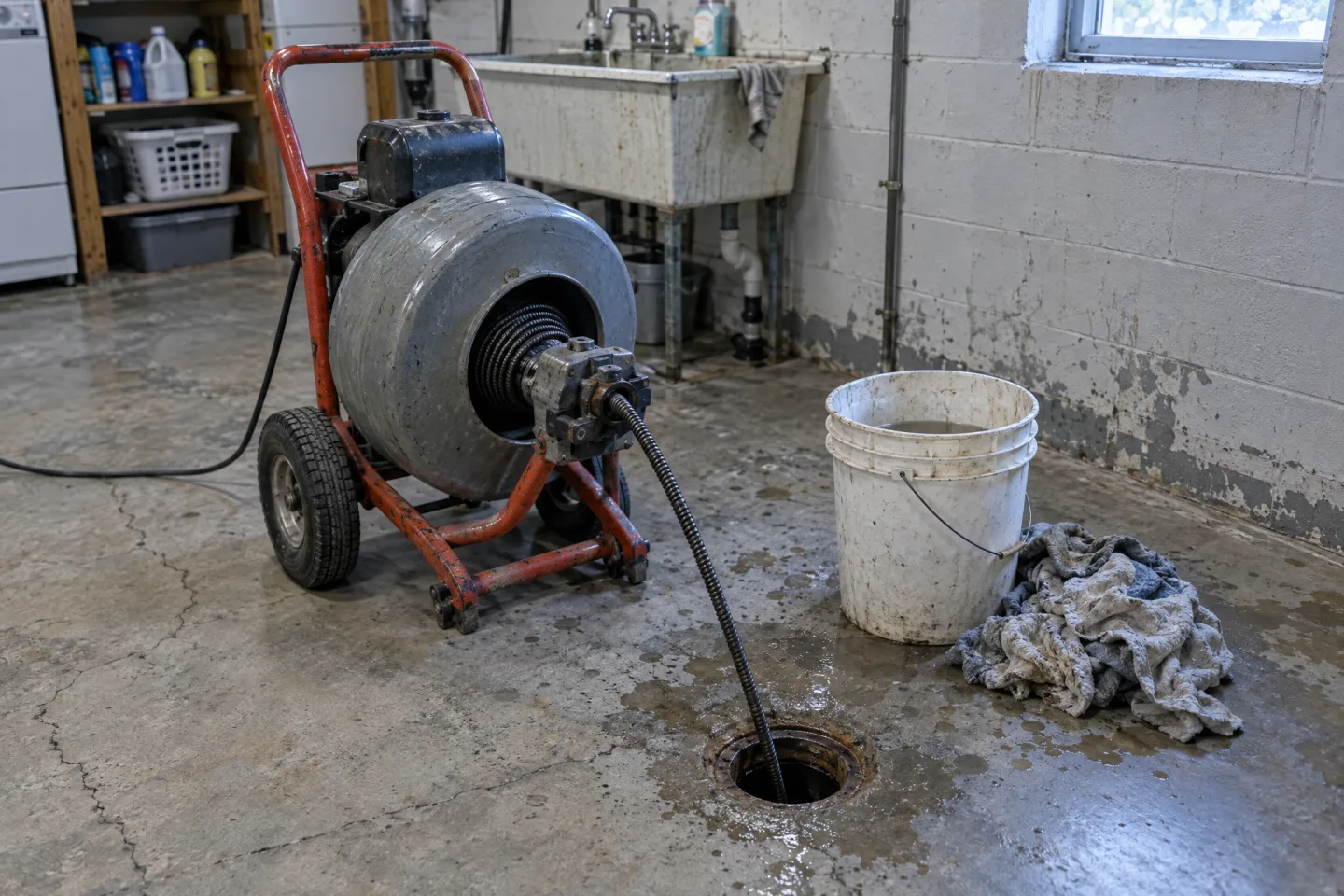
We clear the blockage, check that the line runs properly afterwards, and tell you what we found. If what we find is grease, hair or something that simply went down that shouldn’t have, that’s the end of it. If the line is damaged, misaligned, or has roots in it, we’ll tell you that plainly too, along with what the options cost — rather than clearing it, taking payment and letting you discover the real problem yourself next time.
Worth knowing how the guarantee works here: clearing a drain removes the blockage that is there on the day. A new clog later, caused by grease, wipes, hair, roots or damaged pipe, isn’t a workmanship defect, so drain cleaning is not covered the way an installation is. Our warranty page spells that out, and we’d rather be straight about it up front.
Why the same drain keeps clogging
If a drain blocks more than once in a year, something structural is usually behind it:
- Grease cooling and hardening on pipe walls, narrowing the line a little at a time until anything else that comes along catches on it.
- Hair and soap binding together in bathroom lines, which is the single most common cause in showers and bathroom sinks.
- Tree roots finding a joint or crack in the sewer line. Roots chase water, and an older clay or cast iron line is an invitation. These come back on a schedule unless the line is dealt with.
- Damaged or misaligned pipe — a crushed section, a sagging run that holds water, or a joint that has shifted. Anything passing through catches on the defect.
- Flushable wipes, which are not. They don’t break down, and they snag on everything above.
About chemical drain cleaners
We’d genuinely rather you didn’t. Caustic cleaners are hard on older pipes and on the seals in traps, and they frequently don’t solve the problem — they melt a channel through the blockage and leave the rest, so it closes up again within weeks. Meanwhile the chemical sits in the trap, which makes the drain hazardous for whoever opens it next.
A plunger or a hand auger from the hardware store is safer and usually works better on a simple clog. If neither shifts it, the blockage is further down the line than either tool reaches, and that is the point to call someone. If you have already used a chemical cleaner, just mention it when you call so we know what we’re opening.
Keeping them clear
Most of what we clear could have stayed out in the first place. Grease and cooking oil belong in the bin once cool, not down the sink, regardless of how much hot water follows them. Strainers in bathroom and kitchen drains catch hair and food scraps for a couple of dollars. Nothing but toilet paper goes down a toilet, wipes included. And a kitchen drain flushed with very hot water now and then keeps a film from establishing itself.
If you are on an older sewer line with trees nearby, periodic cleaning on purpose is cheaper and considerably less unpleasant than waiting for the line to back up on its own.
What it costs
Drain cleaning is $180 per hour during regular hours. Emergency drain work outside those hours, when you need help right away, is $360 per hour. We quote most jobs before any work begins. On the rest, we explain what we find before going further. See the full rate table.
People Ask
Drain questions
How do I know if my drain is clogged?
Common signs of a clogged drain include:
- Water draining slowly
- Gurgling sounds in pipes
- Bad odors coming from drains
- Water backing up in sinks, tubs, or showers
Minor clogs can sometimes be cleared with a plunger, but recurring or stubborn clogs may indicate a deeper blockage in the plumbing system. If the problem keeps coming back, it’s best to have a professional plumber inspect the line.
Why does my drain keep clogging?
If your drain keeps clogging repeatedly, the issue is likely deeper in the plumbing system rather than just near the drain opening. Common causes include:
- Grease buildup inside pipes
- Hair and soap residue in bathroom drains
- Tree roots invading sewer lines
- Pipe damage or misalignment
- Large blockages further down the drain line
If clogs keep returning, professional drain cleaning or a plumbing inspection can identify and fix the root cause before it leads to bigger problems.
Should I use a chemical drain cleaner?
We’d rather you didn’t. Caustic drain cleaners are hard on pipes, especially older metal ones and the rubber seals in traps, and they often fail to clear the blockage anyway — they open a channel through it and leave the rest in place, so the clog comes back within weeks.
They also sit in the trap afterwards, which makes the drain genuinely hazardous for whoever opens it next, whether that’s you or us. If you have already poured some in, tell us when you call so we can take precautions.
A plunger or a hand auger is safer and usually more effective. If neither works, the blockage is further down and worth having looked at properly.
Why does my drain smell?
A drain smell is usually a venting or trap problem rather than a clog. Every fixture has a U-shaped trap that holds a plug of water to keep sewer gas out of the house. The smell appears when that water is gone or bypassed:
- A fixture nobody has used for weeks — a guest bathroom or a floor drain — where the trap water has simply evaporated. Run the tap for a minute and see if it clears.
- A blocked vent pipe, which lets draining water siphon the trap empty. Gurgling elsewhere in the house when you drain a sink is the tell.
- Buildup of grease and organic matter on the pipe walls, which smells even when water is still flowing.
If running the water does not fix it, call us — sewer gas in the house is worth sorting out.